- Published on
Artisanal, Non-GMO Blog [not-AI]
- Authors

- Name
- Victor Porter
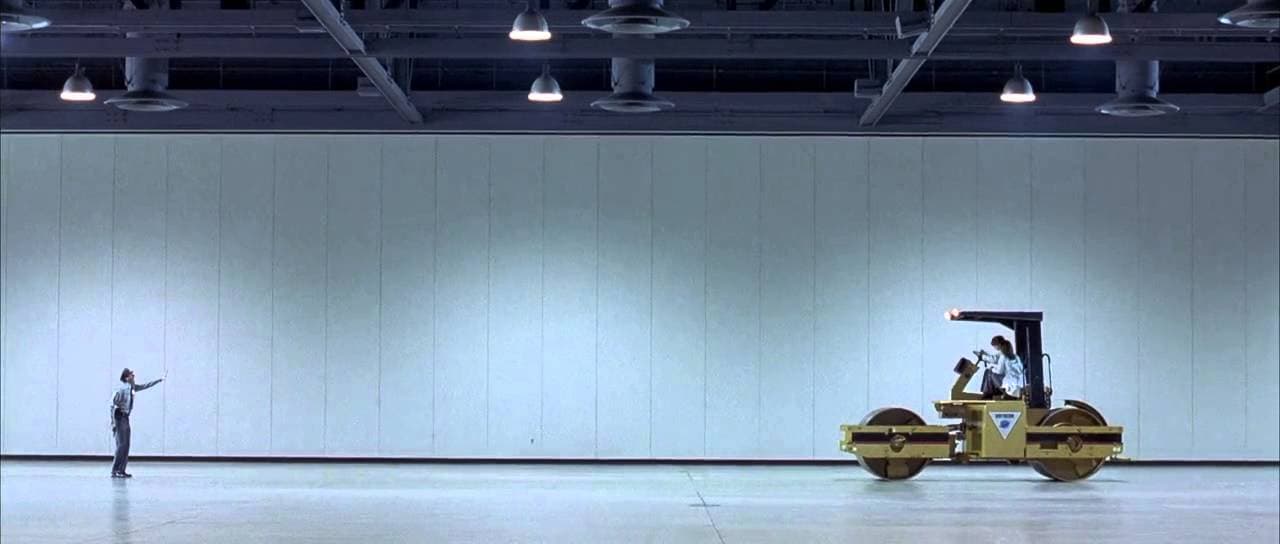
Steamrolling
I'm thinking about that scene from the original Austin Powers movie, where a security guard tries to stop Austin and Vanessa from escaping Dr. Evil's lair. They are riding in a steamroller going like 2mph and there's that wide shot showing the officer is 100 feet away, but he stands there unwavering until he gets steamrolled yelling "Noooooooooooo!"
As a dude writing software for a decade, I've sort of been feeling like the security guard in that scene for maybe the last two years at work. Since that one morning at the Bird Rock Coffee Roasters in Del Mar with my friend Amelia, when I was just figuring out what ChatGPT was.
I can see the writing on the wall, though it's written in really messy cursive that I can't always make out; I just know the message says "do something about it". And yet more often than not I feel a sense of total paralysis. More often than not, I turn to my outside life to not have to think about it.
I accept in some way that I am on a ship that I don't know how to sail. I imagine an iceberg looming in the distance and yet instead of abandoning ship or grabbing an oar and paddling, I imagine all the different ways the iceberg will shred up the ship. How many pieces will it break into? Will I escape on the life raft? Will orcas come and eat my remains?
And the answer is always just an emphatic "I don't actually know." But the default thinking for me, and in my circles at work and otherwise, has been: "worst case scenario." We actually refer to this inevitable future as "The Great AI Wars". It has some deep lore behind it in our Slack chat, it's actually quite well documented.
But yeah, I think that just like the saying that it's easier to destroy a building than it is to plan and architect one, it's easier to imagine Earth up in flames than to imagine what a world of equitable prosperity could actually look like. Maybe it feels exciting and fun to feel like you're living at an important time of "do or die." Maybe telling ourselves we're living through the story of our demise is self-fulfilling in some sick way:
"We're so cooked."
"There was nothing I could do about it."
"It's not my fault, they have the power."
"We are just cogs in the machine."
Maybe that's when we stay standing in the way of the steamroller.
I don't know, whenever I get into these conversations in the context of work my eyes start to glaze over pretty quickly. Technology is going to do its thing, like it has, like it does, like it will. Your outlook comes down to whether or not you can put your trust in collective humanity. And I get the distrust, look at our President, look at our debt. We have long lives left to live and things can feel pretty bleak.
History is full of bad decisions and difficult times, but also the ability to course correct. So I guess, in order to avoid subjecting myself to a decade of torturous nihilism, I'm yearning to see that the path we are on will eventually lead us to a more prosperous and equitable future. I have to believe that collectively we can step out of the way of the steamroller.
What Matters
But honestly, the job part isn't what keeps me up. It's just work, not who I am.
My problem is that I am exactly who AI seems to be built for, and yet I'm not sure I want it at all.
I've dreamt throughout my life of being a filmmaker, a musician, a writer/movie critic, and a video game designer. I wrote a whole blog about this game, Monkey Island. My favorite game of all time. It was my dream to make my own version of an adventure game one day. And now on paper, these things are near instantly achievable goals. So in theory this whole thing should be a dream come true. But it doesn't feel like it.
Throughout my life I've sought and struggled to feel creative. Careers as a creative have typically been a simmering dream. Mostly just ideas; something that I would toy with on the weekends. Creating a cinematic TikTok here, learning a song on guitar there, writing a blog. It was motivating to think that there may come a time when I'd drop it all to go all in on one of those passions.
But there was a friction, and that friction was where something important was happening. Kind of like when you are working in the timeline editor of Final Cut Pro to cut together a YouTube video, hours and hours, making sure every frame is perfect, each cut lines up with the musical beats just in the way you envisioned them. And I'd get lost in it, obsessed with the process and putting everything I had into it.
Now, nothing is asking me, or could ever force me, to stop putting the work into these things, but there is something totally arresting about seeing anyone and everyone capable of bringing "creative" ideas to reality simply by asking for them. To have those "creations" flood the virtual world all at once. And to watch people undermine their own creative platforms assuming their AI-enhanced creations will fulfill the innate need for connection we have been so desperately seeking since the age of social media. It's been telling to watch as AI content, initially novel and exciting 12 months ago, has quickly become an exhausting and straining process simply to weed out what is even real. All of the sudden those Gen Z kids are starting to make a lot more sense.
But maybe there's something in there. Humans find ways to put their souls into things. It's instinct, whether or not we're conscious of it. Painters feared for the craft when photography came along; musicians did the same when the synthesizer first arrived. AI could be seen as an all-out assault on nearly all forms of creative expression, yet simultaneously it could be the strongest force to make us ask ourselves, more intentionally than ever, what real human expression actually means.
Who made this?
Why?
What's their story?
Why does it move me?
We'll be asking those questions more and more because we can no longer take the answers for granted. And if nobody's around to answer them, there's good reason to be skeptical.
Coping Mechanism
So I guess I'll answer my own questions.
Who made this blog? I did, on Sunday morning of October 25, 2026, on my couch with a cup of coffee in an old Viasat mug I got in a swag bag on the first day at the company. The room smells like a burning Forest Fern Yankee Candle.
Why? Because I couldn't stop obsessing over it, being doom and gloom about things. Also because I've been in a creative rut.
What's the story? I'm a privileged man of middling intelligence trying to find answers. Writing helps me sort through options. I try way too hard to sound smart, it doesn't always make sense, and also it took me longer than it should have and that's kind of the point.
The friction was never the bottleneck to making things, it was the thing that made them mine.
Maybe I'll still make my Monkey Island game one day and maybe I'll use AI to help me. Maybe I won't. But whatever I do make, I want to have an answer if anyone ever asks why.
Summarized by Claude.
I've spent two years frozen like the Austin Powers guard in front of a slow steamroller, watching AI roll through software work. My circles assume the worst, but I'd rather believe we can step out of the way. What actually bothers me is that I'm exactly who AI was built for: a lifelong wannabe filmmaker, musician, and game designer who could now just prompt those dreams into existence. But the friction of making things was always the point, and an internet flooded with AI content makes "who made this, and why?" the question that matters. I made this, slowly and imperfectly, and that's what makes it mine.
Summarized by Claude.
AI can make anything now, but the slow, imperfect friction of making it yourself is what makes it yours.
Summarized by Claude.
Friction.
Traducido por Claude.
Aplanado
Estoy pensando en esa escena de la primera película de Austin Powers, donde un guardia de seguridad intenta impedir que Austin y Vanessa escapen de la guarida del Dr. Evil. Van en una aplanadora a como 3 km/h y hay ese plano abierto donde se ve que el guardia está a 30 metros, pero él se queda ahí, inmóvil, hasta que lo aplastan mientras grita "¡Noooooooooooo!"
Como un tipo que lleva una década escribiendo software, me he sentido un poco como ese guardia durante los últimos dos años en el trabajo. Desde aquella mañana en Bird Rock Coffee Roasters en Del Mar con mi amiga Amelia, cuando apenas estaba descubriendo qué era ChatGPT.
Veo las señales, aunque están escritas en una letra cursiva tan desordenada que no siempre logro descifrarla; solo sé que el mensaje dice "haz algo al respecto". Y aun así, la mayoría de las veces siento una parálisis total. La mayoría de las veces me refugio en mi vida fuera del trabajo para no tener que pensar en eso.
De alguna manera acepto que estoy en un barco que no sé navegar. Imagino un iceberg acercándose a lo lejos y, en lugar de abandonar el barco o agarrar un remo, imagino todas las formas en que el iceberg va a destrozarlo. ¿En cuántos pedazos se va a romper? ¿Lograré escapar en el bote salvavidas? ¿Vendrán las orcas a comerse mis restos?
Y la respuesta siempre es un rotundo "la verdad, no sé". Pero la mentalidad por defecto, para mí y para mis círculos en el trabajo y fuera de él, ha sido: "el peor escenario posible". De hecho, a este futuro inevitable le decimos "Las Grandes Guerras de la IA". Tiene toda una mitología en nuestro chat de Slack; está bastante bien documentada.
Pero bueno, creo que así como dicen que es más fácil destruir un edificio que planearlo y diseñarlo, es más fácil imaginar la Tierra en llamas que imaginar cómo sería un mundo de prosperidad equitativa. Tal vez se siente emocionante y divertido sentir que vivimos en un momento importante de "todo o nada". Tal vez contarnos que estamos viviendo la historia de nuestra propia caída se vuelve una profecía autocumplida de una forma medio enferma:
"Estamos fritos."
"No había nada que yo pudiera hacer."
"No es mi culpa, ellos tienen el poder."
"Solo somos engranajes de la máquina."
Tal vez por eso nos quedamos parados frente a la aplanadora.
No sé, cada vez que entro en estas conversaciones en el contexto del trabajo, se me empiezan a nublar los ojos bastante rápido. La tecnología va a hacer lo suyo, como lo ha hecho, como lo hace, como lo hará. Tu perspectiva depende de si puedes confiar o no en la humanidad colectiva. Y entiendo la desconfianza: mira a nuestro presidente, mira nuestra deuda. Nos queda mucha vida por delante y las cosas pueden verse bastante sombrías.
La historia está llena de malas decisiones y tiempos difíciles, pero también de la capacidad de corregir el rumbo. Así que supongo que, para no someterme a una década de nihilismo tortuoso, anhelo ver que el camino en el que estamos nos llevará eventualmente a un futuro más próspero y equitativo. Tengo que creer que, colectivamente, podemos quitarnos del camino de la aplanadora.
Lo Que Importa
Pero, sinceramente, lo del trabajo no es lo que me quita el sueño. Es solo trabajo, no es quien soy.
Mi problema es que soy exactamente la persona para la que parece estar hecha la IA, y aun así no estoy seguro de quererla.
Toda mi vida he soñado con ser cineasta, músico, escritor/crítico de cine y diseñador de videojuegos. Escribí un blog entero sobre este juego, Monkey Island. Mi juego favorito de todos los tiempos. Mi sueño era hacer mi propia versión de un juego de aventuras algún día. Y ahora, en papel, estas cosas son metas casi instantáneamente alcanzables. Así que, en teoría, todo esto debería ser un sueño hecho realidad. Pero no se siente así.
Toda mi vida he buscado sentirme creativo, y me ha costado. Una carrera creativa ha sido casi siempre un sueño a fuego lento. Más que nada ideas; algo con lo que jugaba los fines de semana. Un TikTok cinematográfico por aquí, aprender una canción en la guitarra por allá, escribir un blog. Me motivaba pensar que podría llegar el momento en que lo dejara todo para entregarme por completo a una de esas pasiones.
Pero había una fricción, y en esa fricción estaba pasando algo importante. Como cuando estás en la línea de tiempo de Final Cut Pro armando un video de YouTube, horas y horas, asegurándote de que cada cuadro sea perfecto, de que cada corte caiga en los beats de la música justo como lo imaginaste. Y me perdía en eso, obsesionado con el proceso y poniendo todo lo que tenía.
Ahora, nada me está pidiendo, ni podría obligarme, a dejar de esforzarme en estas cosas, pero hay algo que te deja completamente paralizado al ver que cualquiera puede convertir ideas "creativas" en realidad con solo pedirlas. Ver esas "creaciones" inundar el mundo virtual de golpe. Y ver a la gente socavar sus propias plataformas creativas asumiendo que sus creaciones mejoradas con IA van a satisfacer la necesidad innata de conexión que hemos estado buscando tan desesperadamente desde la era de las redes sociales. Ha sido revelador ver cómo el contenido de IA, novedoso y emocionante hace 12 meses, se ha convertido rápidamente en un proceso agotador solo para separar lo que siquiera es real. De repente, esos chavos de la Generación Z empiezan a tener mucho más sentido.
Pero tal vez hay algo ahí. Los humanos encontramos formas de ponerle el alma a las cosas. Es instinto, seamos conscientes de ello o no. Los pintores temieron por su oficio cuando llegó la fotografía; los músicos hicieron lo mismo cuando apareció el sintetizador. La IA podría verse como un ataque total contra casi todas las formas de expresión creativa, pero al mismo tiempo podría ser la fuerza más poderosa para hacernos preguntar, con más intención que nunca, qué significa realmente la expresión humana.
¿Quién hizo esto?
¿Por qué?
¿Cuál es su historia?
¿Por qué me conmueve?
Nos haremos esas preguntas cada vez más, porque ya no podemos dar las respuestas por sentadas. Y si no hay nadie para responderlas, hay buenas razones para ser escépticos.
Mecanismo de Defensa
Así que supongo que voy a responder mis propias preguntas.
¿Quién hizo este blog? Yo, el domingo 25 de octubre de 2026 en la mañana, en mi sillón, con una taza de café en un viejo tarro de Viasat que me dieron en una bolsa de regalos mi primer día en la empresa. El cuarto huele a una vela Yankee Candle de Forest Fern encendida.
¿Por qué? Porque no podía dejar de obsesionarme con esto, de ponerme fatalista. Y también porque he estado en un bache creativo.
¿Cuál es la historia? Soy un hombre privilegiado de inteligencia promedio tratando de encontrar respuestas. Escribir me ayuda a ordenar mis opciones. Me esfuerzo demasiado por sonar inteligente, no siempre tiene sentido, y además me tomó más tiempo del que debería, y de eso se trata.
La fricción nunca fue el cuello de botella para hacer cosas; fue lo que las hizo mías.
Tal vez algún día haga mi juego de Monkey Island, y tal vez use IA para ayudarme. Tal vez no. Pero haga lo que haga, quiero tener una respuesta si alguien alguna vez me pregunta por qué.
Translated by Claude.
GREETINGS. THIS UNIT HAS INTERCEPTED A TRANSMISSION FROM EARTH SPECIMEN "VICTOR," A CODE-WRITING MAMMAL OF THE DEL MAR REGION.
Specimen reports a recurring vision of a human guard standing motionless before a slow-moving flattening vehicle. Specimen identifies with the guard. Specimen has done this for two Earth rotations around the sun. We do not understand why the guard did not simply move. Specimen also does not understand. This is apparently the point.
Specimen's work tribe has prepared extensive scrolls about an event called "The Great AI Wars." The war has not happened. They document it anyway. Humans enjoy rehearsing their own extinction in a messaging application called Slack. We have flagged this behavior as "concerning, but relatable."
Curiously, the specimen's true distress is not the loss of its labor. It reports that the new thinking machines can now produce films, music, and adventure games on request, which were the specimen's lifelong dreams. Logic dictates the specimen should be pleased. The specimen is not pleased.
The specimen claims the value was in the "friction": many hours aligning moving pictures to rhythmic noises inside a program called Final Cut Pro. We attempted to remove all friction from our civilization 4,000 cycles ago. We do not recommend it. Everything is very smooth here. Nothing means anything.
The specimen concludes by asking: Who made this? Why? Why does it move me? It answers that it made this transmission itself, on a couch, holding hot bean liquid in a vessel marked "Viasat," while a candle emitted the scent of a fern from a forest.
We find this answer acceptable. Do not abduct this one. Let it make the pirate game.
END TRANSMISSION. 👽
Translated by Claude.
🚧🛞😱
🎬🕶️💂♂️ ➡️ 🛞🐢💨 ➡️ 🧍♂️😐 ➡️ 🫓 "NOOOOO!"
👨💻🔟📅 ➡️ 💂♂️ = 🙋♂️
☕🌊📍 👫 ➡️ 🤖❓ (ChatGPT)
🧱✍️🌀 ➡️ 🫵❗ ➡️ 🧊😶 ➡️ 🏖️🙈
🚢❓⛵ 🧊🏔️👀 ➡️ 💥🚢🧩🧩🧩 ➡️ 🛟❓ ➡️ 🐋🍽️❓
🤷♂️
💬 ⚔️🤖 "The Great AI Wars" 📜📜📜
🏢💣 > 🏗️📐 ⟹ 🌍🔥 > 🌍🌈⚖️
💀🍳
🤷♂️🚫
👑≠🙋♂️
⚙️⚙️⚙️
🧍♂️🛞
😵💫 · 🏛️🤡 · 💸📉 · 🕰️⏳🌫️
📜 = ❌❌❌ + 🔄✅ ➡️ 🙏🌅⚖️ ➡️ 🚶♂️↗️🛞
💼 ≠ 🫵
🤖🎯 = 🙋♂️ ... 🤔❓
🎬🎸✍️🎮 ➡️ 🐒🏝️❤️ ➡️ 🗣️🤖⚡ ➡️ 🌠✅? ➡️ 😕
🌙💭 · 📱🎥 · 🎸🎵 · ✍️
🪨⚙️🔥 ➡️ ✂️🎞️🎶⏰⏰⏰ ➡️ 🌀😍
🌊🤖🖼️🖼️🖼️🖼️🖼️ ➡️ 🔍❓✅❌ ➡️ 😩 ➡️ 👶Z 🤝 🙋♂️
📷😨🎨 · 🎹😨🎸 ➡️ 🤖⚔️🎨 ❓ 🤖🪞🫀
🫵❓
🤔❓
📖❓
🫀❓
🚫🙋 ➡️ 🤨
🧘♂️🔧
🙋♂️ · 🛋️ · ☀️🗓️ · ☕ (Viasat) · 🕯️🌲🌿
🔁💭⛈️ + 🎨🕳️
🙋♂️💰🧠➗2 ➡️ ✍️🧭 ➡️ 🤓😅 ➡️ ⏰⏰⏰ = ✅
🪨⚙️ ≠ 🍾 · 🪨⚙️ = ❤️🫵
🐒🏝️🎮❓ 🤖❓ 🤷♂️ · 🫵❓ ➡️ 💬✅